Blog · In the classroom · Leer en español · Ler em português
Interactive class: the first question decides what I'll teach that day
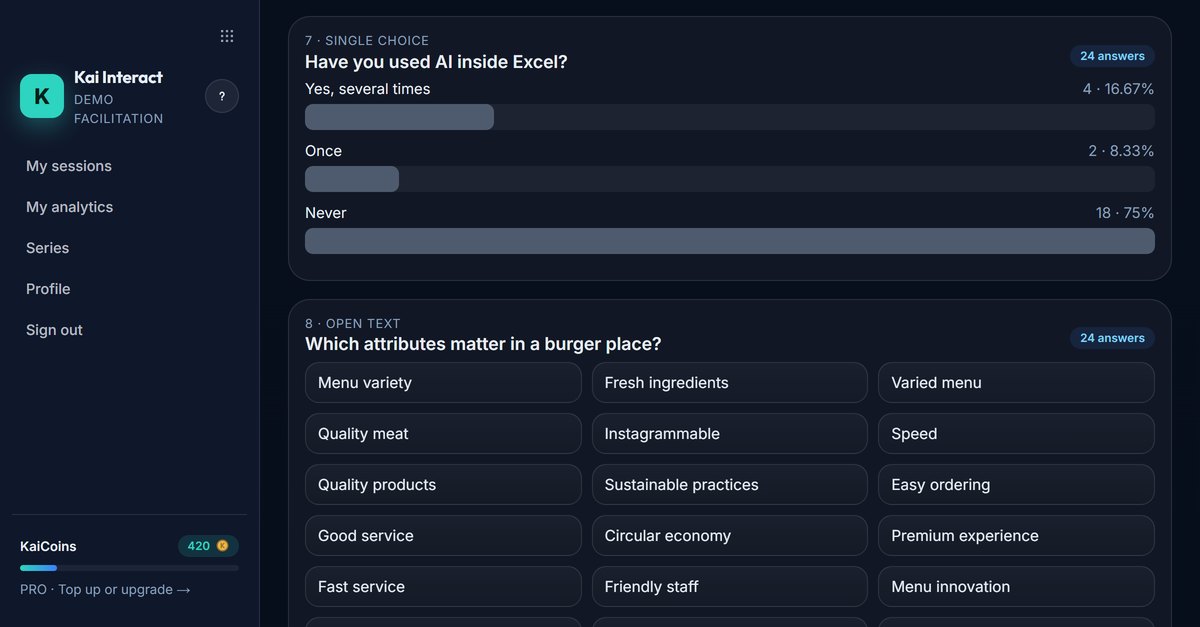
Before I start, I ask what the group knows. When 75% said they had never used AI in Excel, the class I had prepared stopped being useful.
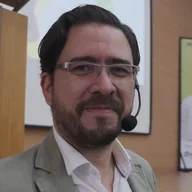
Almost all my classes start with a question that isn't about the subject. Before talking about artificial intelligence I ask how many have used it, which models they've tried and what for; before talking about business models I ask something similar about the topic of the day. It's not an icebreaker (there are more fun ways to do that). It's because the answer decides what I'm going to teach for the next two hours.
The logic is simple, and I'm surprised by how little we use it (myself included, for years). If I see that people already know something about the topic, I go deeper and skip what would just be repeating what they know; if I see that the vast majority haven't even explored it, I make it smaller and start from the beginning. I do this with undergrads, in master's programs and in corporate training, and almost always the class I end up giving isn't a hundred percent the one I had prepared.
The most recent example happened in a training session (I'm telling it because the number surprised me). I asked whether they had used artificial intelligence inside Excel, and seventy-five percent said no. Right there I saw the chance to teach from the beginning what it's for, calmly, instead of diving into the advanced tricks I had in the presentation. If most of them had said yes, honestly, the class would have been completely different, and the people who did know would have been bored with the basics while the rest got lost in the advanced stuff.
Let's think about the scale of that seventy-five percent. In a group of forty people, that's thirty who haven't touched the tool I'm about to talk about, and ten who have. If I had given the class I brought, I would have been talking to ten and losing thirty, and most likely I wouldn't have noticed until the evaluation (or ever, because in a short training there's no evaluation).
And why not ask for a show of hands, like always? There's a detail that matters more than it seems, and it's that the question be anonymous. If I ask “raise your hand if you've never used AI in Excel,” the brave ones raise their hands, and in a room full of professionals nobody wants to be the one who doesn't know. When the answer comes from the phone and nobody sees their neighbor's, the seventy-five percent dare to say no, and that “no” is exactly the data I need.
Now, the objection. Some colleagues think phones in class are a distraction, that once a student unlocks it to answer they don't come back, and that participation through little screens is more show than learning. I don't really know what to tell them, and I say it honestly: some people think so, and they surely have classes where it's happened to them. It works for me, and I think the difference is that the phone has a concrete, short job (answer, look at the result, put it away again) and doesn't stay open all class like a door to WhatsApp.
I don't want to exaggerate either. One question at the start doesn't make a class interactive, and there are wonderful lectures where nobody touches their phone. But I think the teacher who doesn't ask what the group knows before starting is teaching an imaginary group, the one they had in their head when they prepared the slides, and that group is never in the room.
For this kind of question, Kai Interact, which I built myself (so take it with that bias), has a Class mode: the answer shows up as bars on the screen in seconds, the teacher sees the names and the group doesn't, and the same question can be repeated at the end to see how much the room moved, which is a fairly honest way to evaluate yourself as a teacher.
I'm left with the usual doubt. What do you do when the room comes out split down the middle, with half the class that already knows and half that doesn't? I tend to aim for the middle, and I'm not sure it's best for either half.
See you next time. Mauro Z.